Most People Use These American Words Wrong!
Have you ever learned an English word from a movie, a social media post, a song, or even from another English speaker — only to later discover that the word was being used incorrectly?
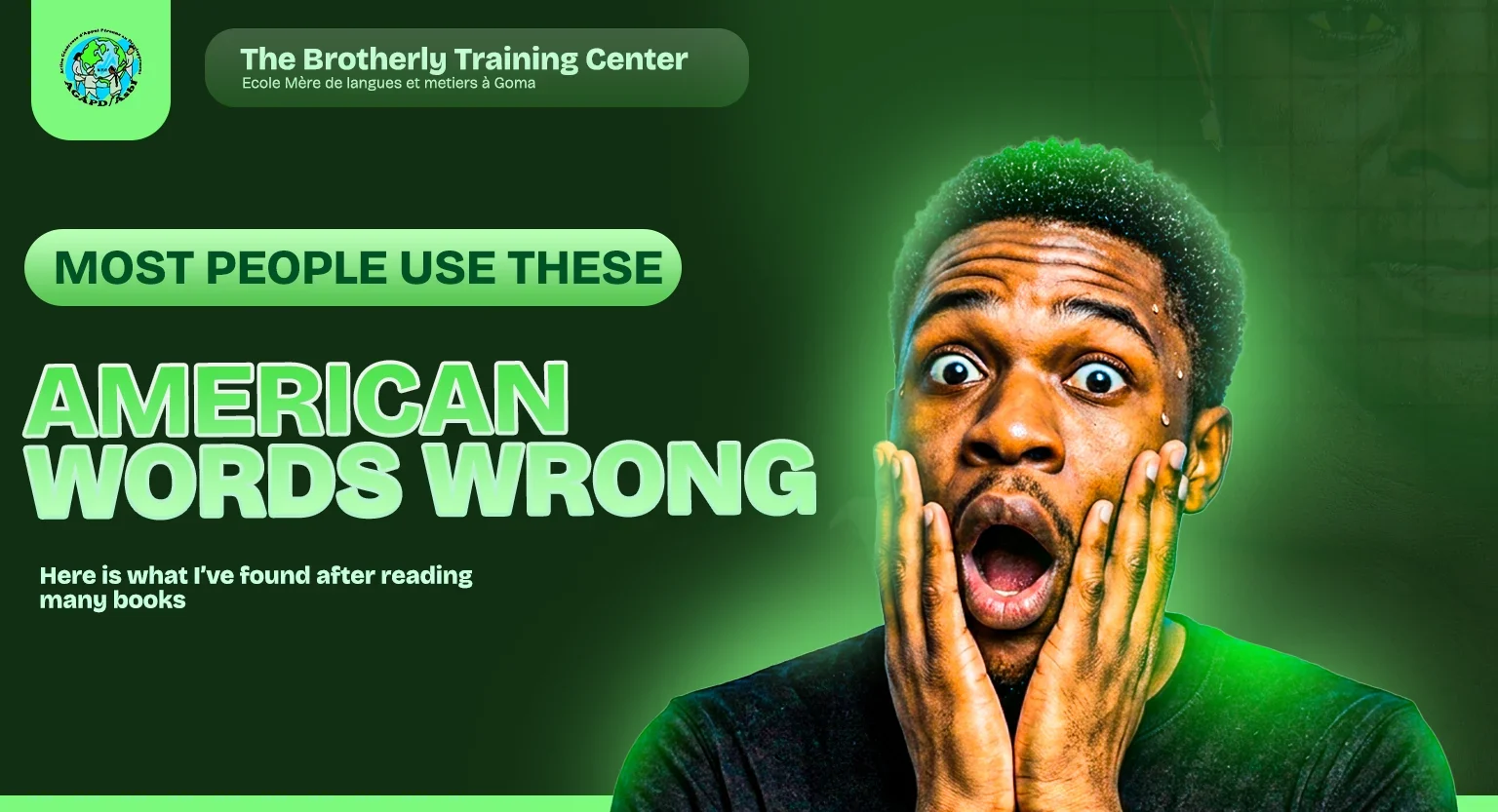
Most People Use These American Words Wrong!
Have you ever learned an English word from a movie, a social media post, a song, or even from another English speaker — only to later discover that the word was being used incorrectly?
That happened to me many times.
Curious and determined to improve my English, I started reading books, articles, dictionaries, and professional publications to understand the real meanings of many American words and expressions.
And here is what I discovered:
CitationMany people use common American English words incorrectly without even realizing it.
English is one of the most influential languages in the world. It is the language of business, technology, education, entertainment, and international communication. However, many learners — and sometimes even native speakers — misuse certain words in everyday conversations.
In this article, I will share some of the most commonly misunderstood American words and explain why learning English from trusted educational institutions is extremely important.
1. “Literally”
One of the most overused and misunderstood American words is “literally.”
Many people say things like:
Citation“I literally died laughing.”
Of course, they did not actually die.
The word “literally” should only be used when something truly happened exactly as described — not as an exaggeration.
✅ Correct Usage:
Citation“He literally forgot his passport at home.”
Citation“The building literally collapsed during the storm.”
❌ Incorrect Usage:
Citation“I literally exploded when I saw the price.”
Citation“She literally melted because of the heat.”
This misuse has become very common on social media and in informal speech.
2. “Actually”
Many English learners confuse the word “actually” with “currently.”
That is incorrect.
The word “actually” means:
- in fact
- really
- to tell the truth
- surprisingly
✅ Example:
Citation“I thought she was American, but actually she is Canadian.”
Another example:
Citation“People think English is easy, but actually it requires consistent practice.”
Using “actually” correctly can make your English sound more natural and professional.
3. “Eventually”
Another misunderstood word is “eventually.”
Many learners mistakenly think it means “possibly” or “maybe.”
In reality, “eventually” means:
Citationfinally, after some time, sooner or later
✅ Correct Example:
Citation“After many years of study, he eventually became fluent in English.”
Citation“She struggled at first, but eventually she passed the exam.”
This word often describes progress, patience, and long-term success.
4. “Respectively”
This word confuses many students because it is mostly used in academic and formal English.
“Respectively” means:
Citationin the same order as previously mentioned
✅ Example:
Citation“Paul and Agape scored 85 and 90 respectively.”
This means:
- Paul scored 85
- Agape scored 90
Understanding words like this can greatly improve your reading comprehension and writing skills.
5. “Affordable”
Many people use “cheap” when they actually mean “affordable.”
The word “cheap” can sometimes sound negative because it may suggest poor quality.
Meanwhile, “affordable” sounds more professional and positive.
✅ Better Example:
Citation“BTC offers affordable professional training programs.”
instead of:
Citation“BTC offers cheap courses.”
Word choice matters in professional communication.
Why Do So Many People Use English Words Incorrectly?
There are several reasons:
- Learning from unverified internet content
- Copying slang without understanding the meaning
- Depending only on movies, music, or TikTok videos
- Lack of qualified teachers
- Translating directly from local languages
- Limited reading habits
- Fear of asking questions
Today, many people speak English casually online, but fluency is not the same as accuracy.
True mastery of English requires:
- Reading quality materials
- Practicing consistently
- Learning grammar properly
- Expanding vocabulary
- Receiving professional guidance
That is why serious learners should study English in a professional learning environment with experienced instructors and practical communication training.
Learn English Professionally with The Brotherly Training Center (BTC)
If you truly want to improve your English, build confidence, and develop professional communication skills, The Brotherly Training Center (BTC) is one of the best places here in Goma and over the world to begin your journey.
BTC is more than just a school.
It is a center of excellence dedicated to transforming lives through education, discipline, professionalism, and practical skills training.
Located in Goma, Democratic Republic of Congo, BTC has helped thousands of students acquire language skills and professional competencies for more than two decades.
Why Students Choose BTC ?
Professional Language Training
BTC offers high-quality language courses in:
- English
- French
- Computer Science
- German
- Spanish
- Chinese
Students learn:
- Grammar
- Speaking
- Pronunciation
- Writing
- Public communication
- Professional vocabulary
- Real-life conversation skills
Practical Professional Skills
BTC also provides vocational and technical training programs such as:
- Computer science
- Humanitarian logistics
- Driving
- Culinary arts
- Plumbing
- Project management
- Digital communication
- Entrepreneurship training
These programs prepare students for both local and international opportunities.
Experienced Trainers and Modern Teaching
BTC collaborates with qualified educators and skilled professionals dedicated to helping students succeed academically and professionally.
The learning environment encourages:
- Discipline
- Confidence
- Creativity
- Leadership
- Practical application
Students are trained not only to pass exams, but also to communicate effectively in real-world situations.
BTC Motto
Citation“Teaching is touching souls forever.”
This inspiring motto reflects BTC’s deep commitment to empowering communities through quality education and lifelong learning.
Why Learning Correct English Matters
Learning correct English can completely transform your future.
Good English communication can help you:
- Get better jobs
- Pass interviews confidently
- Study abroad
- Work internationally
- Access global opportunities
- Build self-confidence
- Avoid embarrassing misunderstandings
- Communicate professionally online and offline
English is not only about grammar.
It is about:
- meaning
- culture
- confidence
- clarity
- professionalism
The way you use words influences how people perceive your intelligence, education, and professionalism.
Reading books helped me discover that many American words are often misunderstood or incorrectly used in everyday conversations.
But it also taught me something even more important:
CitationLearning English correctly requires good teachers, quality resources, regular practice, and the right educational environment.
If you truly want to improve your English and develop professional skills for the future, consider joining The Brotherly Training Center (BTC) and become part of a growing community dedicated to excellence, education, and personal transformation.
Your future can change through education.
And every great journey begins with learning.
Contact & Learn More
Website: https://www.btcagapd.com
Location: Goma, Mukalayi Avenue near Rehema Hospital North Kivu, Democratic Republic of Congo
The Brotherly Training Center (BTC) — empowering students through language and vocational education since 2001.
Partager l’article
Most People Use These American Words Wrong!
Most People Use These American Words Wrong! Have you ever learned an English word from a movie, a social media post, a song, or even from another English spea...